Hazardous & Leaning Tree Removal in McKeesport, PA
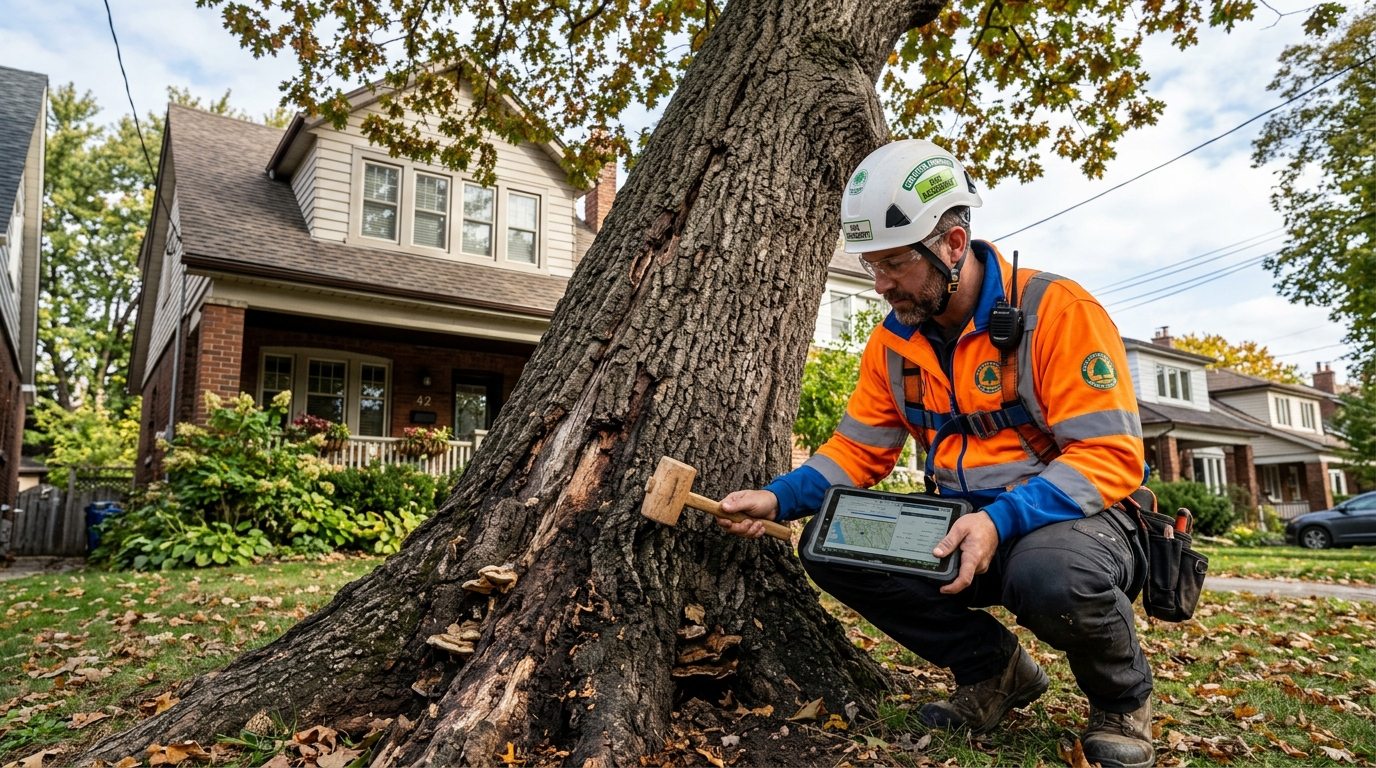
A hazardous tree is an unstable specimen exhibiting structural decay, severe trunk cracking, root plate shearing, or a sudden uncorrected lean that poses an imminent risk of collapsing onto a home, vehicle, public roadway, or power line. In McKeesport, PA, where steep river bluff slopes and heavy clay soils undermine root systems, hazardous trees must be disassembled through controlled sectional rigging before gravity and storm winds cause total collapse.
Many property owners mistakenly assume that as long as a tree still has green foliage, it is structurally sound. In reality, internal heartwood rot, fungal mycelium, and root decay frequently destroy a tree's internal load-bearing capacity while leaving the sapwood and leaves outwardly healthy. When severe Mon Valley storms saturate hillside soils, compromised trees experience catastrophic structural failure. If you observe warning signs on your property, arranging emergency tree removal in McKeesport before the tree topples will save tens of thousands of dollars in roof framing and masonry repairs.
Warning Signs of Imminent Tree Collapse
Inspect mature trees on your property after severe wind or soaking rain events. If you observe any of the following indicators, immediate arborist triage is necessary:
- Sudden or Progressive Lean: A tree that develops an acute tilt over days or hours indicates that roots on the tension side have severed.
- Soil Mounding & Root Heave: Soil cracking, lifting, or mounding on the side of the tree opposite the lean reveals an active root plate failure.
- Vertical Trunk Cracks & Seams: Deep structural fissures running vertically down the main trunk indicate that internal torsional forces have split the heartwood.
- Bracket Fungi (Conks) on Lower Trunk: Fruiting fungal bodies at the root flare prove that wood-decay organisms have extensively consumed the foundational root structure.
- Co-Dominant Stems with Included Bark: V-shaped multi-trunk unions where bark grows inward rather than connecting wood fibers are extremely prone to splitting in high winds.
Controlled Sectional Dismantling vs. Dangerous Felling
In densely populated McKeesport neighborhoods like Grandview and Haler Heights, a hazardous tree cannot simply be dropped from the ground. With neighboring houses, overhead electrical drops, and perimeter fencing within the fall radius, technicians must perform a controlled dismantle:
- Aerial Assessment: Certified climbers or bucket operators inspect the trunk's sound wood depth to verify anchor safety before setting climbing lines.
- Friction Braking & Rigging: High-tensile arborist ropes and friction port-a-wraps lower massive crown sections gently to the ground one piece at a time.
- Crane Support for Dead Wood: If decay is too severe for a climber to tie into safely, teams deploy crane-assisted tree removal, suspending the tree from an overhead boom while cuts are executed.
- Stump Leveling: Trunks are flush-cut at ground level to eliminate tripping hazards and prepare the site for optional stump grinding.
Municipal & Property Liability in Pennsylvania
Under Pennsylvania tort law, property owners who have actual or constructive notice of a hazardous or decaying tree on their property and fail to address it can be held legally liable for negligence if it falls onto a neighbor's structure. If your neighbor has pointed out an unstable tree, or if you have noticed a severe lean, prompt remediation protects you from costly lawsuits. Read our comprehensive guide on Pennsylvania tree property line laws to understand your legal responsibilities.
Frequently Asked Questions About Hazardous Trees
While arborist cabling and bracing can stabilize healthy split-fork canopies, a tree whose root plate is actively heaving out of the ground cannot be saved with cables. In root-shearing emergencies, complete removal is the only safe method to prevent catastrophic property damage.
Maintain a minimum safety perimeter of at least 30 feet and call Duquesne Light and 911 immediately. Never attempt to touch, push, or trim any tree touching utility lines. Dispatched arborists work closely with local utility line-clearance crews to ensure power is safely cut before dismantles begin.
Have a Dangerous Tree Leaning Toward Your Home?
Do not wait for the next storm front to bring it down. Request an urgent arborist evaluation and removal crew now.
Call for Immediate Dispatch: (412) 379-8851